Why Pavement Width Changes the Feel of a Street
Pavement width changes how a street feels by shaping walking room, edge activity and encounters, helping you read whether a route invites ease or alertness.
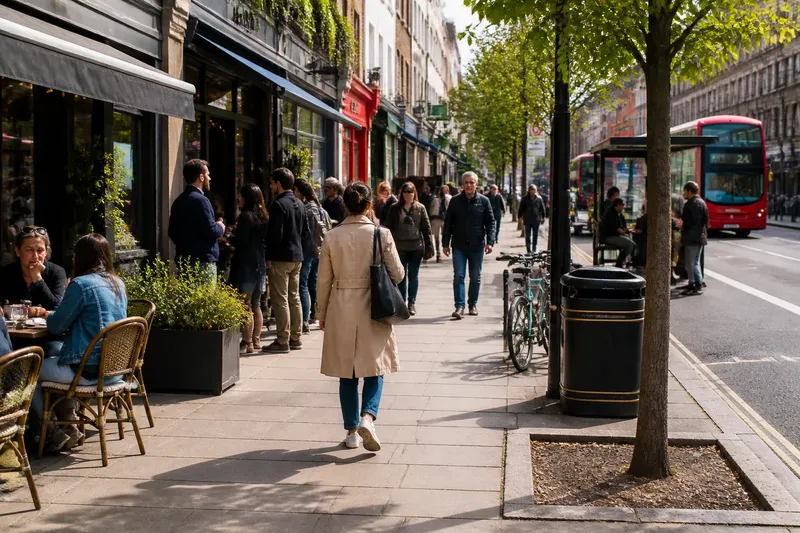
You step past a café queue, turn sideways to let someone through, then move around a bin set beside a signpost. The pavement may look broad from across the road, yet the walking line feels pinched. Pavement width changes the feel of a street not simply through its measurement, but through the usable room left after its edges and everyday activities take their share.
What width tells you
A pavement’s total width is only a starting point. A building wall, kerb, tree pit, bus stop, shop display or parked bicycle can make parts of it difficult to use. What matters to a person walking is the clear route between these interruptions, and whether that route remains legible as other people approach.
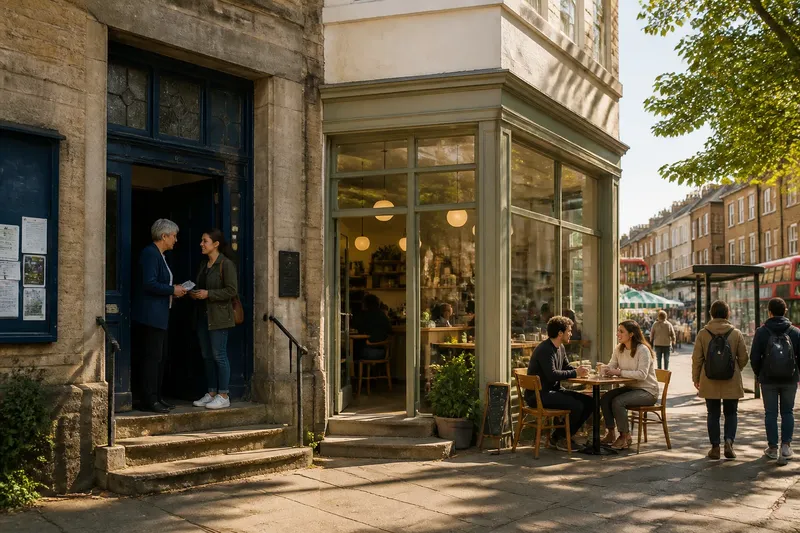
Two streets with similar pavements can therefore feel quite different. A plain frontage may leave a consistent strip for walking, while a lively frontage brings doors, tables and people standing in conversation close to the route. The second street can feel sociable, but a walker may need to watch for sudden movements and negotiate around others.
Width also changes how much adjustment an encounter requires. Where there is room to pass without changing pace or direction, attention can stay on the street ahead. On a tight stretch, people often glance at one another, pause, or choose who moves aside. These small negotiations are part of the street’s character, not just an inconvenience to be measured.
Why do pavement edges matter?
How do shopfronts affect the walking line?
Shopfronts give a pavement activity and detail, but outward-opening doors, racks and queues can narrow the clear path. Notice whether people can browse or enter without stepping into the main walking line. A recessed doorway may allow both uses to happen alongside one another.
What do trees and street furniture change?
Seats, signposts, bins and tree pits occupy space, but their placement can also make the route easier to read. A row of objects near the kerb may leave a calmer strip beside the buildings; scattered objects can make walkers weave. Look at the pattern they create, not only the number of things present.
Does a wide pavement always feel comfortable?
No. A broad, exposed stretch with little shelter or activity may feel empty, while a narrower pavement with clear edges and a steady stream of people can feel settled. Comfort depends on what the space allows and how it is bounded, as well as how much room appears available.
Why does the kerbside matter?
The kerb separates walking space from traffic, but loading, cycle parking, bus queues and crossings can blur that boundary. A pavement can feel calmer when its edge is predictable and people waiting do not spill across the route. At busy stops, the waiting area may shape the experience as much as the pavement itself.
How do competing uses change a street?
A pavement is often asked to support several activities at once: walking, waiting, shopping, sitting, deliveries and access to buildings. These uses do not all need the same kind of space. A person carrying shopping may move slowly; a group waiting for a bus may occupy a broad patch; someone leaving a shop needs room to pause and orient themselves.
The important question is not whether every activity belongs on every pavement, but how their paths meet. A café table placed beside a wall may leave a clear route, whereas a queue stretching from the entrance can divide it. A bus shelter can protect people from rain yet make passing awkward if the waiting area has no distinct edge.
Say you walk along a high street where a bakery queue reaches a narrow section beside a tree pit. If the queue shifts towards the shopfront and people can pass on the kerb side without brushing against traffic, the pinch point may feel manageable. If a delivery trolley arrives at the same time, the available route can disappear for a while. The observable change is not the pavement’s built width, but how many uses are competing for its clear strip.
For a useful street reading, watch the same stretch at different moments. A quiet morning may reveal the underlying layout; lunchtime may show how tables and queues use it; school or commuting periods may bring different flows. This is not a demand to count people. It is a way to notice whether the route has room to absorb ordinary variation or depends on every activity staying perfectly in place.
What makes a narrow stretch workable?
A narrow pavement need not feel hostile if its edges are orderly and its route is easy to anticipate. A continuous building line, a clear approach to a crossing and furniture kept in a consistent zone can reduce the need to sidestep. At a pinch point, a visible place to pause can help people pass without turning the whole pavement into a bottleneck.
By contrast, small interruptions can accumulate. A signboard, a loose bin and a parked scooter may each seem minor, but together they can leave no obvious path for a pushchair, walking aid or person carrying a bulky bag. The result is a street that asks some walkers to make more adjustments than others. Reading pavement width therefore includes noticing who can use the route without having to improvise.
When considering a street change, distinguish between a permanent constraint and a movable use. A building entrance or mature tree is part of the setting; a temporary display or poorly placed bin may be easier to reposition. Local access requirements and the relevant authority’s rules matter when changes are proposed, so seek qualified advice where the design or safety implications are substantial.
How can you read a pavement?
On your next walk, consider these questions as observations rather than a scorecard:
- Where is the clearest walking line? Notice whether it stays continuous or repeatedly shifts from one side to the other.
- What occupies the edges? Look for doors, displays, trees, seats, signs and waiting areas, and note which ones interrupt movement.
- Where do people pause? Identify whether they can wait without blocking someone passing or entering a building.
- What happens when walkers meet? See whether they pass comfortably, slow down, or step towards the kerb or a doorway.
- Does the street change by time of day? Compare a quiet period with a busier one to see which uses appear and where pressure gathers.
These observations help explain why pavement width feels different from one street to another. A generous clear route can support an easy pace, but width alone cannot create shelter, interest or a useful place to wait. A narrower route may work well when its edges are coherent and competing activities have room to coexist. The most revealing detail is often the point where a person has to stop, turn or give way: there, the street shows exactly how its space is being shared.