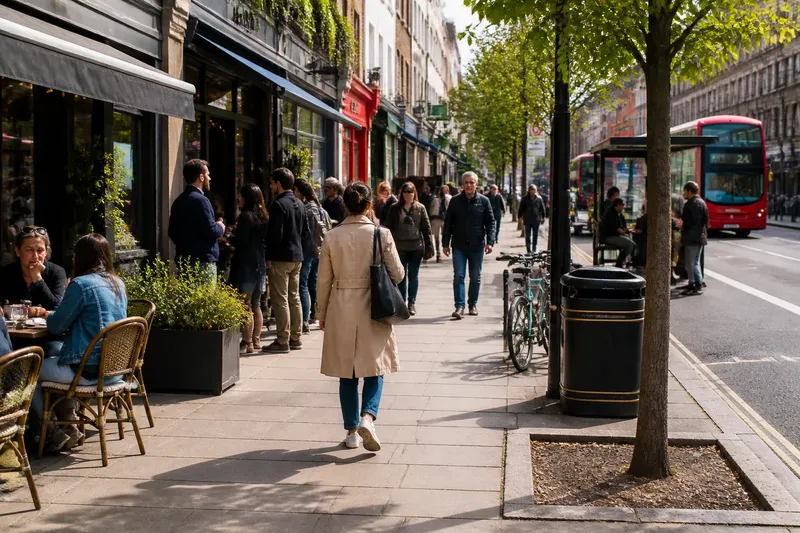
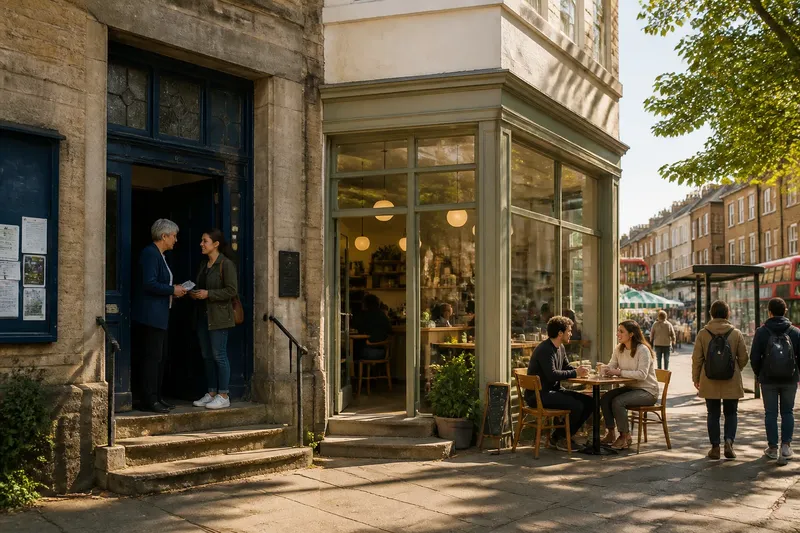
The Shortcut Myth: Why the Fastest Route Can Feel Longer
The fastest route can feel longer when turns and interruptions demand attention. Learn how to judge a city journey by clarity and continuity, not distance alone.
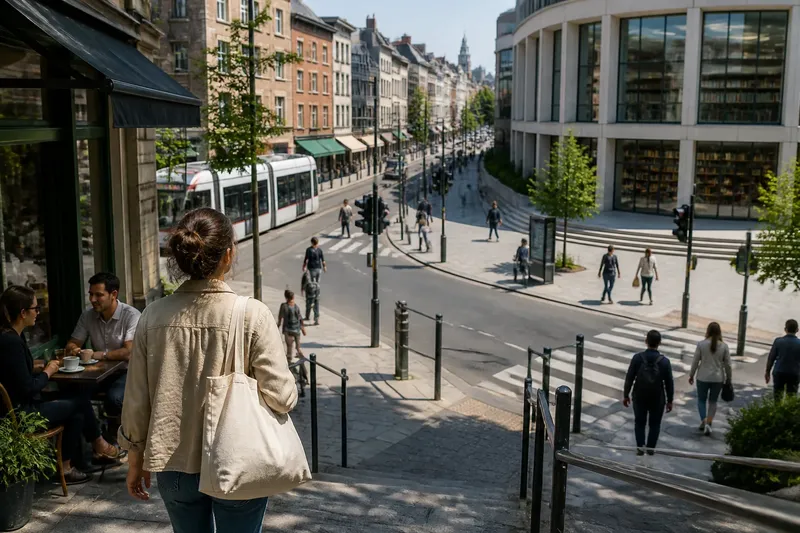
You leave a small café near a busy junction with a library in mind, and your phone offers a route that looks shorter than the one you usually take. The fastest route can feel longer, though, when each turn asks for another decision and the walk keeps breaking into fragments.
This is not simply a matter of mood or patience. A city journey is made from signals: a street name you can read, a crossing you can use, a shopfront that confirms you are still on course. When those signals are scarce, even a direct line on a map can become a demanding walk. A longer route may feel easier because its direction remains apparent.
One walk, two routes
Imagine that you are visiting a neighbourhood for the first time. You have left a café beside a tram stop and need to reach a public library across a busy district. You are carrying a tote bag and have a little time, but you do not know the local streets. Your phone shows two plausible options.
The first cuts through a tight network of side streets. On the map, it is the fastest route: several short blocks, frequent corners and a narrow lane that joins a larger road. The second follows a broad, familiar-looking street, passes a small square and reaches the library by a gentle bend. It appears less direct.
At the start, the first route seems an obvious choice. Then the first turn arrives almost immediately. The street name is mounted high on a building, partly hidden by a tree. A delivery van blocks the view into the lane, so you slow down to check the map. After the turn, the buildings look much alike. You keep moving, but your attention has shifted from the neighbourhood to the next instruction.
The route has not become physically longer. It has become harder to read. A moment spent locating a sign, checking a screen or deciding whether a passage is public can make progress feel uncertain. The walk is no longer one continuous movement towards the library; it is a series of small tests.
Turns spend attention
Every turn is a point where a walker has to connect the map to the street. That connection is easy when a corner opens onto a distinct landmark, such as a church tower, a station entrance or a recognisable row of shops. It is less easy when the street bends, the sign is absent, or several similar lanes meet at once.
Frequent turns also make it harder to hold a route in mind. A person may remember “follow the main street to the square” more readily than “take the second left, then the narrow right, then cross behind the loading bay”. The first instruction has a clear shape. The second depends on counting and close attention, which can be disrupted by traffic, conversation or simply looking up at a building.
This helps explain why route length and felt effort are different things. A direct route can place a steady demand on attention, while a longer one can offer stretches in which the next move is obvious. The body keeps walking in both cases, but the mind does not have to work equally hard to stay oriented.
Interruptions break continuity
In the invented walk, the side-street route soon meets a delivery entrance and a road crossing without a clear pedestrian refuge. The walker waits, looks for a safe gap and then checks the map again on the far side. None of these pauses is unusual on its own. Together, they interrupt the sense of forward movement.
Interruptions include more than traffic lights. A temporary barrier can divert people around a worksite; a queue can narrow a pavement; an open plaza may offer several equally plausible ways through. A route planner may draw a line across a space that is technically traversable but difficult to interpret from ground level. The walker has to translate a clean diagram into a changing physical scene.
Waiting can feel especially costly when the route gives little reassurance about what comes next. If a crossing is followed by another uncertain turn, the pause does not feel like a brief break in a known journey. It feels like the start of another problem. By contrast, a clear crossing onto a street that leads visibly towards the destination can preserve continuity even when it takes time.
Legibility changes the pace
Legibility is the ease with which a person can understand where they are and what direction makes sense. It comes from the street itself as much as from signs: a consistent building line, a visible landmark, a shop-lined high street, or a path that continues without sudden forks.
On the second route, the invented walker follows a broad street. The library is not visible from the café, but the road carries a recognisable sequence: tram rails, a row of independent shops, then the square. At the square, the library’s name appears on a sign. The walker can look ahead instead of repeatedly consulting a screen.
That reassurance changes the character of the walk. There are fewer decisions, and each landmark confirms the previous one. The route may include a longer stretch of pavement, yet it feels more coherent because the destination remains part of a story the street tells. The walker knows what the next section is for.
Legibility is not the same as simplicity for every person. A broad road may be noisy or exposed; a square can be confusing if its paths cross without clear direction. Someone using a mobility aid may value smooth paving and accessible crossings more than a direct line. Someone unfamiliar with the area may prefer visible landmarks. The useful route depends on what makes the journey understandable and manageable for the person taking it.
What makes a route feel shorter?
Why can a shorter route feel longer?
A shorter route may require frequent decisions, awkward crossings or repeated map checks. Those interruptions make the journey feel less continuous, even when the destination is physically closer.
Do landmarks help with wayfinding?
Landmarks give a walker visible confirmation of direction and progress. A station entrance, distinctive corner shop or recognisable tower can be easier to remember than a sequence of street names.
Should I always follow the fastest option?
No single route suits every journey or person. Compare the route’s crossings, turns, accessibility and clarity as well as its estimated travel time, then choose what fits your circumstances.
How can I compare two routes before leaving?
Look for where each route bends, crosses traffic or passes through spaces with several possible exits. Then check whether street names and landmarks are likely to make the next direction clear on the ground.
Reading the route before setting off
In the imagined situation, the walker chooses the broad street and reaches the library without needing to stop for another map check. The useful result is not that the longer-looking route has been proved faster. It is that its continuity matches the walker’s unfamiliarity with the neighbourhood and makes the journey easier to follow.
A quick comparison can focus on the experience of the route rather than the line alone:
- Count decision points. Notice how often the route asks you to choose a new street or path. More turns may mean more chances to lose the thread.
- Look for visible confirmation. Identify a landmark or continuous street that can reassure you that you are heading the right way.
- Check crossings and pauses. Look for major roads, junctions, entrances and likely pinch points where movement may stop or become uncertain.
- Notice the space between turns. A route with a longer, clear stretch can be easier to remember than several short blocks with similar-looking corners.
- Consider your own needs. Pavement condition, step-free access, noise, weather exposure and carrying a bag may affect what feels manageable.
- Choose a fallback landmark. If a street is closed or confusing, know which main road, square or station you can use to orient yourself again.
These are not rules for always preferring main roads. A quiet lane may be pleasant and entirely clear, while a broad avenue can be stressful or hard to cross. The point is to notice what the route asks of you: how many decisions, how much interruption and how much trust in signs or a phone.
Choosing continuity over closeness
For the next unfamiliar journey, treat the fastest route as one candidate rather than an instruction. Compare it with an option that follows a recognisable street or passes a dependable landmark. If you are travelling with someone who needs step-free access, check the route details and relevant local information before setting out; map lines do not always reveal every barrier.
The shortcut in the invented walk was close on the screen but demanding in the street. The alternative gave the walker fewer moments of uncertainty and a clearer sense of progress. That is the practical lesson of the shortcut myth: a route can feel shorter when it is legible, continuous and suited to the person walking it, even if it does not draw the neatest line on a map.
When the two options still seem close, choose the one with a clear point of recovery: a main street or recognisable square that remains easy to find if you miss a turn. On an unfamiliar city walk, knowing how to regain your bearings can matter more than shaving a corner off the map.